
In both society and gaming, rules exist for a reason. They create structure, define boundaries, and ensure that individuals can participate without chaos undermining the experience. In Diablo 2, a game that is praised for its depth, challenge, and long-term progression, the way players acquire items often sparks debate. Yet when examined through the lens of law enforcement and legal systems, the decision to buy Diablo 2 items from reputable sources can be understood not as a shortcut, but as an adherence to order, accountability, and fair play.
Law enforcement operates on the principle that order is maintained when rules are clear and consistently applied. Officers do not exist to eliminate effort or responsibility, but to ensure that systems function as intended. Similarly, Diablo 2 was designed with an intricate item economy that rewards time, knowledge, and strategic decision-making.
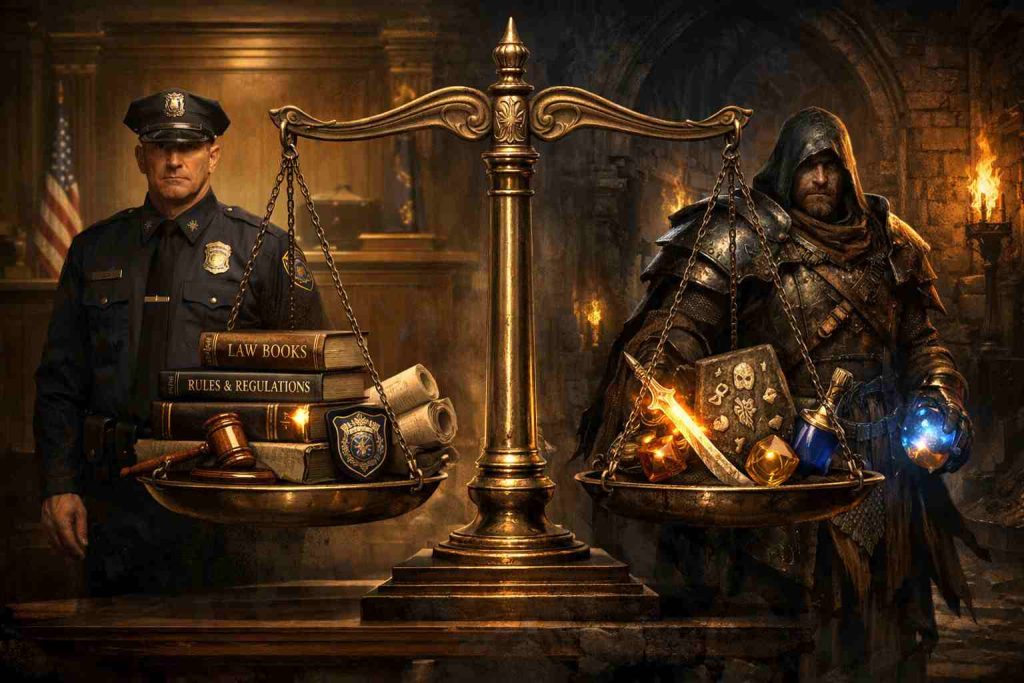
A key similarity between policing and item acquisition lies in regulation. In legal systems, not all actions are equal. There is a critical distinction between lawful transactions and illicit activity. Licensed businesses, documented processes, and consumer protections exist to safeguard participants and discourage harmful behavior.
Within the Diablo 2 ecosystem, reputable item-buying services serve a comparable role. They have transparency. They are following guidelines. They are prioritizing account safety and security. This distinction is essential.
Just as law enforcement works to prevent fraud and exploitation, responsible item services aim to reduce scams, account theft, and practices that destabilize the in-game economy.
Accountability is central to both policing and fair gaming environments. In law enforcement, actions are logged, reviewed, and subject to oversight to maintain public trust. This transparency reinforces legitimacy and ensures that power is exercised responsibly.
Trusted item-buying services mirror this accountability through clear policies, customer support, and consistent delivery standards. Players who choose these channels are not bypassing responsibility; they are engaging in a structured marketplace that values traceability and reliability. This approach supports trust and stability within the game’s community.
Critics often frame buying items as “cutting corners,” yet this perspective overlooks how modern systems operate. In everyday life, people hire professionals, outsource specialized tasks, and rely on regulated services to navigate complex environments efficiently. These practices are widely accepted because they function within established rules.
In Diablo 2, purchasing items can serve a similar purpose. It allows players to focus on strategy, experimentation, and gameplay rather than repetitive grinding that may not align with their time constraints. When done responsibly, this choice complements the game’s design rather than undermining it.
From a law-and-order standpoint, balance is essential. Laws are not meant to suppress participation, but to protect communities from abuse and imbalance. The same principle applies to fair play in Diablo 2. The objective is not to enforce a single playstyle, but to preserve competitive integrity and enjoyment for all players.
When item acquisition occurs through secure and ethical channels, it minimizes harm and promotes stability. Ultimately, buying Diablo 2 items reflects respect for structure rather than a rejection of it. It reinforces the idea that fair systems thrive when participants choose transparency, accountability, and order.